Posts mit dem Label Alan Rickman werden angezeigt. Alle Posts anzeigen

Donnerstag, 17. März 2011

John Gabriel Borkman in New York

The Irish Times, 15.01.2011
Abbey's snowy Ibsen takes New York by storm
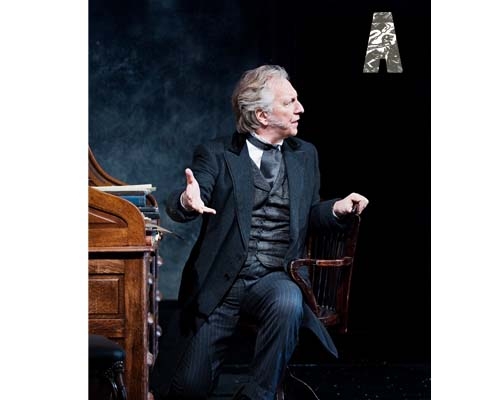
THE ABBEY Theatre's production of Henrik Ibsen's John Gabriel Borkman opened at the Brooklyn Academy of Music's (BAM) Harvey Theatre on Wednesday before a packed audience that included luminaries of the Irish cultural and diplomatic world and American sponsors of the arts.  The production, which features Fiona Shaw, Alan Rickman, Lindsay Duncan and John Kavanagh, broke box office records during its seven-week run in Dublin last autumn, said Abbey director Fiach Mac Conghail, who travelled to New York for the US opening.  The production will continue in Brooklyn until February 6th. Two-thirds of the tickets for the run had been sold before opening night.  Former US ambassador to Ireland Jean Kennedy Smith, a fan of the Abbey since her years in Dublin, called the performance 'really beautiful' and 'so well-acted'. Anne Anderson, Ireland's Ambassador to the United Nations, and writer Colum McCann also attended.  At the opening night party in the theatre, Irish-American philanthropist and chair of the American Ireland Fund Loretta Brennan Glucksman, chief executive of Culture Ireland Eugene Downes and McCann reminisced about the series of informal suppers that led to the Imagine Ireland cultural season, of which the Abbey production is an important part. Niall Burgess, former Irish consul general in New York, and actor Gabriel Byrne, Ireland's cultural ambassador, also attended the suppers.  John Gabriel Borkman tells the story of a disgraced but unrepentant banker who has served years in prison for embezzling his friends' money. 'The spectre of Bernie Madoff looms large,' Mac Conghail said. The play also 'reminds our public here in the US that we might be in some financial and political trouble, that it's not all fiction,' he said.  Board members from the Abbey Theatre Foundation, a new US group still in the process of being formed, attended the opening. 'We have two objectives,' said Mac Conghail. 'To bring the best of Irish actors and Irish theatre to the US. The second is to raise money, because there isn't money left in Ireland.'  Glucksman said she was amazed that a century-old play could be so topical: 'We could put names on it -- which I shan't right now -- but it's in our newspapers every day, the curse of greed just doesn't change and we never learn.'  Rickman, Duncan and Kavanagh delivered excellent performances, 'But it is Ms Shaw, an actress of infinite cunning, who walks away with the production,' the New York Times said yesterday, describing the set as a 'snow-piled ice palace'. Shaw plays Borkman's estranged wife, who lives one floor below him and refers to Borkman only as 'himself, the bank manager'.  'Everything about Ms Shaw's Gunhild from her hobbled walk to the way she clasps her stomach, as if trying to contain the pain within -- evokes a soul crippled by years of cancerous confinement,' said the newspaper, which called Shaw 'an expert in the art of festering' and a 'human flame-thrower'.  At the opening night party, Shaw said the Abbey's production of Frank McGuinness's new version of Borkman shows Irish theatre must broaden its horizons. 'The repertoire in Ireland must, must now start to include everything in the 17th century that we forgot,' she said. 'We must start embracing Jacobean plays, Shakespeare plays. It's our century as well.'  The US audience seemed to treat Ibsen's dark tale of a family undone as a comedy, laughing even at the most tragic moments. 'New Yorkers are much more sensitive to irony, and that's what the laughter was about,' said BAM executive producer Joe Melillo.  The Harvey Theatre was created by Peter Brook and Harvey Lichtenstein when they brought Brook's adaptation of the Sanskrit poem the Mahabharata to New York in 1987. Like Brook's Bouffes du Nord in Paris, the Harvey was derelict and has been left in its distressed state, with ceiling frescoes and columns showing its former grandeur.  In Dublin, the set for Borkman showed a late 19th-century interior. In Brooklyn, antique furniture is placed among snowdrifts on the stage, which extends into the audience.  'This theatre has an extraordinary sense of layers of history,' said Downes. 'It's like a palimpsest, with all the ghosts and layers of time. It's a unique space. The Abbey has done it proud tonight. The Abbey has done Ireland proud.'
LARA MARLOWE in Brooklyn

Alan Rickman

Bonner General-Anzeiger, 22.02.2011

Der beste Bösewicht

Der jetzt 65-jährige Alan Rickman verkörpert mysteriöse Charaktere perfekt

KevinCostner soll nach den Dreharbeiten zu "RobinHood - König der Diebe" dafür gesorgt haben, dass die Szenen mit AlanRickman als Sheriff vonNottingham gekürzt werden. Costner wolle nicht imSchatten des Briten stehen, so munkelte man. Gelungen ist das nicht.In vielen seiner Filme spielt Rickman die großen Stars an die Wand. Selbst ist er trotzdem nie zumWeltstar geworden. Gestern nun ist der Schauspieler, der zuletzt als Lehrer Severus Snape in den Harry-Potter-Filmen zu sehen war, 65 Jahre alt geworden.

Rickman gehört zu den Schauspielern, die mit wenigen Gesichtsausdrücken und Augenbewegungen mehr erzählen können als andere mit großen Worten. Mit Bravour spielt er verschlossene, mysteriöse Bösewichte. "Als Schauspieler verurteilst du die Charaktere, die du spielst, nicht", sagte er einmal. Dass er nie den Sprung in die erste Reihe der Hollywood-Stars schaffte, scheint Rickman nicht zu stören. Im Privatleben ist er bescheiden und skandalfrei:Seit mehr als 30 Jahren lebt er in London mit einer Ökonomie-Dozentin und Kommunalpolitikerin zusammen.

Aufgewachsen in London als eines von vier Kindern einer Arbeiterfamilie, musste Rickman mit acht Jahren den Verlust des Vaters verkraften. Schon während der Schulzeit spielte erTheater, studierte dann aber Grafikdesign und machte das Schauspielen zum Hobby. Nach ein paar Jahren als Grafiker ging er - mit 26 Jahren - an die Schauspielschule. Er wurde zum gefragten Theaterschauspieler, war Ende der 70er Jahre zwei Jahre Mitglied der RoyalShakespeare Company. SeinenDurchbruch auf der Leinwand schaffte er 1988 als Gegenspieler von Bruce Willis in "Stirb langsam". Doch wechselte er immer wieder zurück an die Bühne - auch als Regisseur.

Den meisten dürfte er aber als die ambivalenteste Figur der Harry-Potter-Filme bekannt sein: Als Lehrer Severus Snape, der Harry und seine Freunde schikaniert - aber immer wieder dafür sorgt, dass Harry nichts passiert.
dpa

Dienstag, 18. Januar 2011

The Sunday Times vom 19.12.2010 - John Gabriel B.

It's an emergency - quick, call the artists
They are pontificating in foreign newspapers, adapting classical plays to reflect our economic difficulties, and making bold documentaries and trenchant rap music. So what have they got to
say about the crisis, asks Harry Browne

...

Frank McGuinness turned to a more recent and neglected classic for his stab at financial relevance, an adaptation of Ibsen's John Gabriel Borkman for the Abbey. McGuinness and actor Alan Rickman daringly pose the question: why shouldn't we be able to sympathise with the banker whose reach exceeded his grasp, just because he was ultimately brought down by scandal? They answer it too: because he is an absurd egomaniacal monster who allowed his greed to divorce him from his humanity. Like Walsh's suitors in Penelope, Borkman sees his fate sealed in real time, the clock literally ticking on the Abbey stage.
As the hit production ran into the winter, and the national crisis outside deepened into deadlines for Irish sovereignty, it seemed to tick for all of us. The pick of the bunch, though, was a play that seemed to take itself less seriously.

...

Sonntag, 5. Dezember 2010

Is it OK to laugh at Ibsen?

Source: http://www.guardian.co.uk/culture/theatreblog/2010/oct/25/ibsen-laughing-funny-seriously

We have tended to treat the Norwegian master's plays as solemn dramas, but have we been taking him too seriously?

A handful of times during Alan Rickman's performance as John Gabriel Borkman, the audience at Dublin's Abbey theatre lets out a laugh. Sometimes it is because of references to dubious banking practices, which seem to us newly topical, but the rest of the time it is because of Borkman's casual misogyny. In the translation by Frank McGuinness, his lines include: "If there are good women, we don't know them," and: "I suppose it's reasonable to see things as you do. You are a woman."

I've seen this kind of reaction to Ibsen plays before and I'm never very certain about it. If the audience regards Borkman's opinions as funny, can it also take him seriously as a tragic hero, even a flawed one? Society has changed so much in the past century that it is hard to imagine a man conceiving these ideas, still less expressing them in public. By contrast, Ibsen's own audiences, a decade or two before the suffragettes, must have included those who believed "one woman is no better than another". For them, Borkman would have been less a reactionary oaf than a man genuinely caught out by society's shifting values.

It is still possible to express this today. In the fine production of Ibsen's A Doll's House just opened at Dundee Rep, Neil McKinven plays Torvald Helmer with great compassion. He is a genial, likeable sort, whose only flaw is a preoccupation with work. It means that when he expresses his patrician values, principally the idea that his wife Nora is nothing more than an extension of himself, we find them disturbing but also credible. We don't laugh because, even though we don't share his worldview, we can understand it.

But have I got it wrong? The other evening, I made a similar point to Jeremy Raison, outgoing director of Glasgow's Citizens theatre, and he suggested Ibsen planted the laughs deliberately. In my review of Raison's production of Ibsen's Ghosts, I wrote that Pastor Manders's "homilies about marital fidelity" produced "derisory laughter", a response the director believes the playwright intended. In Norway, he said, they stage Ibsen more as domestic comedy than the weighty drama we assume here.

In her review of Ibsen's The Lady from the Sea in Manchester this week, Lyn Gardner refers to the play's "sly humour" and it is certainly true that director Lee Breuer managed to express Ibsen's radicalism while having a great deal of fun in Mabou Mines DollHouse, a production with an Amazon Nora and a dwarf Torvald as well as lots of silly Scandinavian accents. It is hard to imagine that's what Ibsen had in mind, but he might have appreciated the lighter touch.

If he is taken too seriously, he would not be alone. Chekhov, for example, suffered particularly from our humour bypass when his plays arrived in Britain. The evidence of the first UK production of The Cherry Orchard in 1911 is that it was worthy but dull, much like the subsequent stagings of The Seagull and Uncle Vanya. It wasn't until a 1925 revival of The Cherry Orchard that the penny dropped. "Once we knew we were allowed to laugh, of course, everything fell into place and took on meaning," recalled the critic WA Darlington.

Even on our own turf, we can find ourselves getting overly po-faced. We tend to treat the tragedies of Shakespeare as though every second had to be laden with gloom. Acknowledging the comedy, however, can unleash waves of energy and build a poignant contrast to the seriousness. It is something that often happens in the democratic space of the Globe and it happened, for example, in Malachi Bogdanov's very funny 1998 production of Richard III which used a kindergarten setting both for comic effect and to make a point about the immature nature of the king's brutality.

So if I grumble about people laughing at Ibsen, am I being a pedant, like theatre's answer to Network Rail apologising for the wrong kind of humour in the stalls, or are some jokes better than others?

Montag, 22. November 2010

Set Talk - Alan Rickman (2006)

SET TALK

Autor(en): CHRISTIAN AUST

"Ich war ein echter Spätzünder und gehörte eher zu den Uncoolen"

ALAN RICKMAN über seine künstlerischen Ambitionen, das London der wilden Sixties und den langen Weg zur Schauspielerei

Warum haben Sie Kunst studiert?
In jungen Jahren schien mir Schauspieler kein ernsthafter Beruf zu sein. Ich wäre damals einfach noch nicht reif dafür gewesen. Außerdem musste ich erst einmal herausfinden, wer ich wirklich bin. Ich war eben ein echter Spätzünder.

Auf der Kunsthochschule im London der Sechziger muss es wild zugegangen sein.
Und ob! Aber nach den ersten beiden Semestern habe ich grafisches Design studiert. Das war der eher solide Teil der Veranstaltung, während meine Mitschüler aus dem Malerei-Seminar beschlossen, künftig nur noch unter Einfluss von LSD zu malen.Das galt als unglaublich cool. Ich hingegen gehörte da wohl eher zu den Uncoolen.

Malen Sie noch immer?
Ja, und ich träume davon, eines Tages in meinem Haus eine große Gemäldegalerie zu eröffnen.

Source: Gala, 02.11.2006 Nr: 45

Alan Rickman - Interview (2006)

Parfüm? Das ist nichts für mich!


Alan Rickman über Düfte, Orgien und große Talente

Autor(en): Christian Renz


Welches Parfüm benutzen Sie selbst?

Gar keines. Herrendüfte sind nichts für mich.


Aber Sie verschenken doch sicher mal einen Duft?

Früher mal. An meine Freundin. Ich habe aber festgestellt, dass man als Mann keinen Duft für eine Frau kaufen sollte. Der Geruch verändert sich. Was im Laden toll war, roch bei ihr nicht mehr so gut. Ich kaufe nur noch, was mir befohlen wird.


Puh, der Mann kann so richtig böse sein. Natürlich nur im Film. Wer Alan Rickman (60) trifft, der lernt einen A zuvorkommenden, humorvollen Menschen kennen. Einen, der Berühmtheit als lästige Nebenerscheinung betrachtet. Dabei kennt ihn (fast) jeder Kinogänger, entweder als Terrorist im ersten "Stirb langsam"-Film oder als Severus Snape aus "Harry Potter" Jetzt veredelt Rickman die Leinwand-Adaption von "Das Parfum".


Warum mögen Sie Parfüms nicht?
... bei Frauen schon. Nur auf meiner Haut mag ich es nicht (saugt theatralisch seinen eigenen Geruch in die Nase).


Was ist der betörendste Duft, den Sie jemals gerochen haben?
Ich werde Ihnen jetzt nicht die Antwort geben, die Sie hören wollen (lacht kauzig). Der schönste Duft ist sicher der eines Babys, das gerade gewaschen wurde. Dieser reine Duft der Haut.


Das zentrale Thema von "Das Parfum" ist ein perfekter Geruchssinn. Welches Talent wurden Sie gern besitzen?
Klavier spielen. Meine Mutter hat Klavier gespielt. Ich fand das ganz wunderbar. Sie musste aber irgendwann aufhören. Sie war allein erziehend, musste sich darum sorgen, dass wir was zu Essen bekamen.


Warum lernen Sie es nicht selbst?
Ich bin sicher, es wird eine Zeit kommen, da uns allen ein Chip eingepflanzt wird. Per Knopfdruck können wir dann Klavier spielen.


...und bis dahin?
Mir fehlt die Zeit. Da bleibt nur das Genießen. In der Wohnung über uns wohnt eine Konzert-Pianistin. Wenn sie übt, setzen wir uns mit einem Glas Rotwein auf den Balkon und hören zu. Das ist fantastisch.


Fantastisch - gutes Stichwort. Bei "Das Parfum gibt es eine Orgienszene...
Es war großartig. Also, ich hätte nie gedacht, dass ich jemals in meinem Leben durch eine Menge aus 850 nackten, sich liebenden Leibern gehen würde.


War nicht die Gefahr groß, ins Pornografische abzugleiten?
Ich bin sehr stolz, dass die Szene eben nicht sexistisch geworden ist. Obwohl alle übereinanderlagen und sich aneinander rieben.


Glauben Sie, dass "Das Parfum" ein Hit wird?

Da bin ich ganz sicher.


In den Harry-Potter-Filmen spielen Sie Severus Snape. Hat diese Erfolgs-Rolle Ihr Leben verändert?
Jede Rolle verändert einen Schauspieler ein kleines bisschen. Die größte Veränderung in meinem Leben war, dass ich überhaupt einen Film gemacht habe. Ich spielte den Bösewicht im ersten "Stirb Langsam"-Film und hatte plötzlich eine Film-Karriere. Ich ging als normaler Zuschauer ins Premieren-Kino und kam als Star heraus, dem der Weg durch die Masse gebahnt werden musste.

Source: Kölner Express Samstag, 09.09.2006

Sonntag, 14. November 2010

Alan in Dublin


Im Moment gibt es nicht viele Schauspieler, die ich unbedingt auf der Bühne sehen wollte - Alan Rickman gehört dazu. Im Deutschen hört man ihn ja nur synchronisiert und seine Stimme ist nicht so sehr das Thema. In den englisch-sprachigen Staaten schon. Er ist sozusagen berühmt für seine seidenweiche und sexy Stimme.
Nun konnte ich nmich in Dublin davon überzeugen.
Allerdings brauchte ich schon eine Weile um mich "reinzuhören". Anfangs habe ich ihn nur schlecht verstanden, aber dann ging es.

"John Gabriel Borkamn" ein altes Stück von Ibsen - inhaltlich moder. E sgeht um einen Banker, der das Geld seiner Kunden verspekuliert hat.

Aktuell, oder ?
Mehr später.

Alan Rickman in "John Gabriel Borkman" - Fotogalerie